Living with a Wood-Fired Oven
I’ve had a Four Grand-Mère wood-fired oven in my garden for a couple of years and have been learning how to get the best out of it. I’ve baked with it in 8″ of snow and often in the dark, but can confirm that decent weather and daylight are more pleasant. As a weekend baker, I prepare for a large bread bake usually around 24 1kg loaves of various recipes to be baked in 3 batches. It means that when I want to use the oven, it starts from completely cold, rather than having any residual heat from the previous bake and so the oven needs to be taken to bread-baking temperature (about 220°C). This takes a bit of time but isn’t difficult and on the way, we manage to squeeze in a pizza night. I light the oven on a Saturday afternoon for a Sunday bake. You might do it all on the Sunday but you miss out on the pizza part.
Quick Overview of Wood-Fired Oven Baking
There are 2 methods for baking with a wood-fired oven: door open and door closed. When the door is open, a constant flow of air can feed the burning fire within. This is used for baking (or grilling) foods such as pizza. Pizza need a burning flame and a hot hearth in order to be grilled quickly (about 3 minutes) and have the unmistakable flavour of a wood-fired oven pizza. Bread and most other bakes do not have a burning fire within the chamber while baking. Instead, the oven will have been pre-heated and the chamber completely cleared of anything burning. The foods are then placed into the oven and the insulating door (the “stop gap”). The body of the oven releases heat into the chamber and the food bakes.
Wood-Fired Oven Technology
There are two basic wood-fired oven technologies: retained heat thermal store and direct heat. Retained heat ovens (like ours from Four Grand-Mère) have a large mass, that is, they are very heavy (a few 100kg) being made from materials such as thermal bricks and tiles. They are designed to absorb the heat from the fire deeply within the body of the oven and for the heat to even out and then to be released back into the chamber during a bake, and then to recharge the oven between batches until the heat is depleted at which point a top-up fire might be required. On my oven, I can bake 3 batches of 8 1kg loaves between firings. The heat store means that the oven temperature will be even and through the insulation, maintained for a long period. Direct heat ovens tend to be much lighter in construction, typically made from steel and have a separate firebox where a fire is maintained during the bake. This is good for making the oven more portable but can make maintaining a constant temperature during a bake tricky.
How to Light Your Oven
Firstly, it is important to know how to light the oven without smoking yourself too much. The key is to understand the process and what the fire is telling you about the fuel, temperature and air supply.
Lighting a wood-fired oven is more than lighting a bonfire: it is somewhere that food is to be prepared so the things that you burn matter – no treated or painted bits of wood, no old pallets with the odd nail in. It is also important to understand something about how fires work to keep smoke to a minimum. When a wood-fired oven is operating correctly there will be no visible smoke coming from the chimney – just a heat haze. Getting your oven working correctly is easily mastered once a few principles are understood.
A fire making smoke is a fire that is not burning efficiently, it is an indication of incomplete combustion which is a waste of fuel and the smoke is a nuisance. The trick is to get the chamber and the chimney warmed quickly so that the fire can burn at the optimum temperature such that there is a heat-haze rather than smoke.
The first thing to do is to get the chimney warmed since if it has been left for a long period, it will be cold and the cold air within it will form a plug preventing it from drawing well. At the same time, getting the chamber warming will allow the small fire to get hot enough to burn the fuel completely and so eliminate smoke in the shortest time.
To do this, fuel that burns quickly, such as clean paper (no tape or staples) scrunched up to form a bed about 30cm by 30cm and 5cm thick is a good start – be generous with it as the aim is to get the fire lit in one go. The paper is the first part of a chain of fuels: it burns brightly and enough to light the cardboard strips which should be placed on top of the paper, again be quite generous with it. On the cardboard, I add some think pieces of wood, small sticks of kindling. These have a large surface area to volume and so the burning cardboard will burn for long enough to get these to light. In turn, the kindling burns for longer, and for long enough to get the main fuel alight.
I have experimented with various fuels in my wood-fired oven. I have tried using the clean bits of wood from pallets but don’t think that this is a great idea since I don’t know its history and really don’t want to have to explain any missed nails. Logs are good, but it is very important that the wood is well seasoned, something that is both tricky and costly to get hold of. Logs need to have a moisture level of about 12% to burn well otherwise lots of the energy within the burning log is used to evaporate the water rather than to heat your oven. Not many log suppliers can guarantee this so you will need to store the cut logs yourself for a period before use – normally 6 months or more. My favourite fuel of the moment is Verdo compressed wood briquettes. They are made using only dried wood fibres so they are clean, dense and dry. When they are alight, they open up and burn a little faster than logs, burning with a clean flame. I get them by the pallet load (Verdo Wood Briquettes from Woof! Woodfuels) and I think that this compares well with a typical “load” of logs.

So, to the paper, card and kindling pile, I put a wood briquette on either side and one across the top. Then, with the flue damper open (if you have one fitted), and with the oven door wide open, the paper is lit. The paper should catch quickly in turn igniting the card which will burn long enough to get the kindling to light which will ignite the briquettes. If there is enough card and kindling, the oven air temperature will increase rapidly to push out the plug of cold air in the chimney. As the kindling takes hold, the initial smoke will quickly disappear to leave a heat haze.
After a few minutes, the paper and card will die out as the fuel is exhausted and the briquettes should start to burn. I can’t resist a bit of a poke at this point to rearrange the fire, to make sure that any paper and card is burned away. When the fire is clearly burning well, I will then add a couple more briquettes and close the door a little if it is windy to stop the fire burning too quickly and sending all of the heat up the chimney. I tend to check on the fire every 30-60 minutes to make sure that it has sufficient fuel and to top it up. The aim is to get a flaming fire to fill about 1/3 of the hearth area.
A sign that the oven is low on fuel or airflow while the chamber is being heated is when you can see smoke coming from the chimney – check it by slowly opening the door wider and you might find that the smoke ignites and starts burning correctly again. Otherwise, see if more fuel is needed.
Saturday Afternoon – First Burn and Pizza!
I tend to light the oven on a Saturday afternoon, leaving it burning until the early evening and then cook pizza in there with the fire swept to the back of the oven and with a flame going. I make a batch of pizza dough and make 10 pizza each with 150g dough. The oven is up to temperature when the tiles (our model is the Four Grand-Mère with tiles lining the dome) turn white, or when (a little) flour thrown onto the hearth immediately turns black – the oven wants to be hot! I slide in 3 of the pizzas using a 9″ peel and by the time that the next 3 are ready to go in (working fast!), the first are ready to come out.
Once finished, I rake the burning embers to cover the hearth to burn away the odd bits of cheese and olives that have rolled off, and then put the insulating door in place, close the damper and the outer door and leave until next morning.
Sunday – Bake Day!
I usually do the bake on the Sunday. The oven will still be pretty hot in the chamber although not hot enough for baking. For this, a top-up firing will be needed. Repeat the fire-lighting above which will be easier as already warm and leave to burn vigorously for a couple of hours. After the wood has died down to ash and a few embers, it is time to scrape out the fire, into an ash-bin. I then use a brass brush to sweep out the remaining embers and as much ash as I have patience to clear. Some next use a damp (not sopping wet) cloth on the end of the brush to clean the hearth of the remaining ash. Check the oven temperature, hearth and dome. For this I use an infra-red thermometer and usually read something around the 300°C mark. This is too hot and what I want is for the oven to absorb the additional heat into the body for release later, and for the temperature to even out across the oven. So, put the insulating door in place and close the damper if you have one and leave for 30 minutes or so and check to see if the temperature has settled to 220C to 240C on the hearth. Any higher will tend to burn the base of the loaf.

With the oven at 220°C-240°C, it is time to bake. I slide 8 loaves from their bannetons (proving baskets) onto a 12″ long-handled peel, into my oven as quickly as I can and replace the insulating door and the outer door. For the first 20 minutes, I close the damper in order to promote a steamy baking environment for crustier crust. After 20 minutes, I open the damper otherwise, the level of steam can lead to water running out of the front of the oven (mine has the tell-tale stains of this!). After about 40 minutes, the smell drifting across the garden tells me that the first batch is done. These I take out and then close up the oven, including closing the damper. The oven is then left for about 20 minutes while it recharges and evens out again. Then, the process is repeated for the second and third batch.
After the third batch the oven is still pretty hot, around 200C, but not hot enough for more bread, so there is plenty of opportunity for other bakes to make the most of the retained heat which will be available for several hours. Cakes through meringues and fruit or herb drying are all options for the organised.
Apricot Loaf with Fermented Dough
White bread made from stoneground flour tastes great. Add a little rye flour to it and it tastes even greater. Use fermented dough to raise the bread and it is greater still. Now, add some dried apricots and it is the greatest.
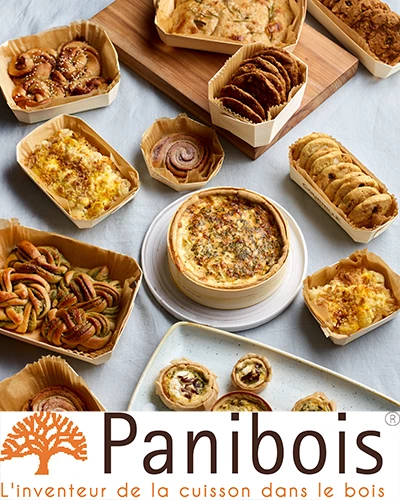
This recipe comes from Panibois, the French manufacturers of the wooden baking moulds commonly seen in France in bakeries for displaying and selling breads and cakes. Often they are used as baskets for loose rolls and pastries on the burgeoning boulangerie countertop.
The recipe makes three 500g loaves, just right for the Duc baking mould which means that the loaf can stay in the mould from final proving through baking to serving, taking any selling, hiking or freezing in its stride.
Fermented Dough:
Ingredients:
- 140g Strong White Flour
- 100g water
- 5g fresh yeast
- 5g salt
Method:
To make the bread, make the fermented dough the night before and put it into the fridge, for a few hours before and keep it warm to develop ready to add to the main dough.
To the water add the yeast and stir until evenly dispersed. To this add the flour and the salt and form into a dough with your fingers or a dough whisk. Give a knead for about a minute and then place the dough in a covered bowl either in the fridge if keeping until the next day, or in a warm room for about 6 hours. The dough will have risen to about double its volume when ready.
Main Dough:
Ingredients:
- 250g Fermented Dough
- 600g Strong White Flour
- 140g Rye Flour
- 400g warm water
- 5g fresh yeast
- 15g salt
- 120g dried apricots, halved
Method:
If you are using a dough mixer, add the water, fresh yeast, fermented dough and both flours and start to mix at a slow speed until combined. Next, add the salt and knead at a fairly slow speed for about 3 minutes and add the apricots 30 seconds from the end.
If preparing by hand, in a large bowl stir the fresh yeast into the warm water until dispersed and then add the fermented dough and flours, mixing together with a dough whisk or your hands if you want to dive in. Turn out onto your work-surface add the salt and apricot and then knead for about 5 minutes, until the dough becomes smooth and elastic.
Place the dough into a bowl, cover with a damp tea-towel and leave in a warm room for an hour and a half. Cut the dough into 3 even pieces and gently fold into a loaf shape and place each into a Duc mould. Cover these with the damp tea-towel in a warm room and leave until doubled in volume. Preheat your oven to 210°C (200°C for a fan oven) and bake for about 40 minutes, until golden.
The bread is excellent sliced with butter and cheddar and keeps well for several days.
USA Pan 9″ Pullman Loaf
Our 13″ Pullman Pan from Chicago Metallic has been very popular, and has prompted requests for a smaller version and so we have started to stock a 9″ Pullman by USA Pan, a sister company to Chicago Metallic. The recipe below is based on the Practically Perfect recipe, adapted to fill the 9″ pan. Using the quantities below, you have the basis upon which your can alter the recipe to suit you.
Ingredients:
- 385g Little Salkeld White flour (75%)
- 115g Little Salkeld Granarius flour (25%)
- 25g Dried Malt Extract (or milk power) (5%)
- 12g sugar (2.5%)
- 25g softened butter (5%)
- 300g warm water (60%)
- 12g sea salt (2.5%)
- 12g fresh yeast (2.5%) (or 2 tsp dried yeast)
Method:
The method I prefer to use is based on that described in Dan Lepard’s Handmade Loaf as it is easy and takes most of the slog out of kneading the bread. In a large bowl, add the sugar and dried malt extract (or dried milk), butter and water and stir until dissolved. Add the remaining ingredients and stir together until reasonably mixed (for this, I use a dough whisk). Leave for 10 minutes then scrape out the bowl onto a lightly oiled work surface. Give a light knead for 10 seconds or so. The dough will be pretty wet and gooey at this point, so I hold a scraper in one
hand to scoop the dough and push down with the other which stops the dough getting all over the place. Put the dough back into the bowl for another 10 minutes and Repeat. Repeat once more and then after 30 minutes by which time the dough should be much more elastic and smooth. You probably won’t need the scraper to help with kneading any more.
Put the dough into the bowl again and leave it for an hour in a warm place and covered with a damp tea towel (this helps stop a skin forming on the dough).
Lightly oil the Pullman Pan with a light vegetable oil (not olive oil as this become very sticky when baked). Take out the dough and give a light knead to leave it flattened and round. Roll up the dough to form a cylinder – don’t be too worried about the precision of t

his as the dough is very soft and will fill t
he pan as it goes through its final prove. Put the dough into the pan and put back into the warm place, again covered with a damp tea towel.
In about an hour, the dough should have risen to about an inch (2.5cm) from the top of the pan. This is the ideal point for baking the loaf as it will expand a little more in the oven to completely fill the void. Take the pan from the warm place and pre-heat your oven to 200°C. Making sure that the lid of the pan has been lightly oiled, slide it into place, closing the pan. Place the pan into the oven and bake for 30-40 minutes. Check to see if your loaf is baked and, if it, is, turn it out onto a cooling rack.
World’s Biggest Coffee Morning
Macmillan Cancer Support has its World’s Biggest Coffee Morning on 30th September and in addition to this, it has produced a lovely little book The Little Book of Treats which is available from Marks and Spencer stores. It contains lots of cake and biscuit recipes that made my wife and daughters ooh and aah – and compelled them to try a couple of them. They made the Beetroot and Chocolate Brownies and Claudia Winkleman’s Gingerbread Men, although our girls made Gingerbread butterflies which were delicious. We’re going to have a go at the Pumpkin and Ginger Cupcake and Sophie Dahl’s Lemon Capri Torte recipes next. Read More
Dan Lepard to Open Eden Project Bakery
Eden is cooking up a nine-day festival of food, drink, dance and merriment this autumn as it continues its exciting new culinary adventure.
The project has radically reinvented its approach to food with the recent introduction of the Eden Bakery serving up delicious hand-made breads and pastries and a new café area in the Mediterranean Biome offering Tuscan stews and wine.
Read More
No Hassle Honey and Vanilla Ice-Cream
It is fairly warm outside and the kids are off school so what better than an easy home-made ice-cream? This is a no-hassle ice-cream, made with very few ingredients – no stabilizers, emulsifiers, vegetable oils or any of that nonsense commonly used in mass-produced ice-cream.
Read More
Garden Herb Sourdough
Gardens are burgeoning with greenery so it is a good time for a straightforward sourdough loaf using garden herbs. This loaf is fairly light containing mostly white flour with some rye and spelt flour for more complex flavours. I used a selection of herbs currently in our garden: parsley, coriander, sorrel, chives, rosemary and a good helping of nasturtium leaves which have a mild peppery flavour. You can any herbs that you have, just make sure that you take out any woody bits before finely chopping them all up.
Read More
Hot-Cross Buns Phoenix Bakery Style
Aidan Chapman of the Phoenix Bakery in Weymouth likes to do things properly and his annual two-week stint making 1000s of hot-cross buns is no exception. We chatted about them recently and he mentioned his frustration at not being able to get a really good non-chemical clove oil, the flavour that turns a fruit bun into a hot-cross bun (that, and the cross!). So, we decided to have some specially made containing nothing but clove essence suspended in sunflower oil. It is good stuff – and you don’t need to use a lot. In return, Aidan generously parted with his special hot-cross bun recipe.
Read More
A Day in the Life of a Phoenix Baker

Recently, Aidan Chapman, master baker and joint owner with his wife, Lisa, of the Phoenix Bakery in Weymouth invited me to come along and spend a Saturday on his Apprentice Course to experience his one-man artisan bakery at first hand. It’s a compact bakery with the shop-front split between sales and baking, all on full display to passing trade. Above the shop and bakery, Aidan has a café through which there is a steady stream of customers munching on the pick of the day’s quiche, bruschetta and cake with a fresh coffee.
Read More
Colomba Pasquale – Easter Dove Cake
Colomba Pasquale is a soft, intensely orangey cake with an almond topping, used to celebrate Easter in Italy. It is a member of the panettone family baked in a stylised dove shape, made with almonds, candied peel and Veneziana essence. The cake is eaten when (in Italy) both oranges and almonds are in blossom, celebrating the promise of the crop to come.
Read More
Food's